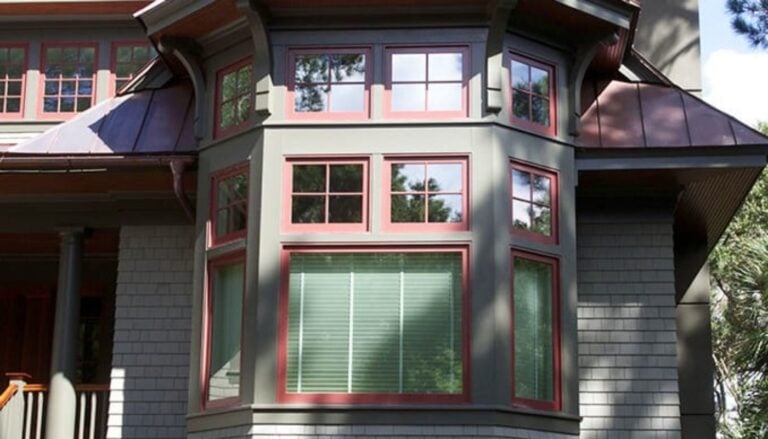
Storm shutters are covers that close over windows and glass doors before a hurricane, so wind-blown debris can’t break the glass. The main types are storm panels, fabric panels, accordion shutters, roll-down shutters, Bahama shutters, colonial shutters and hidden-anchor systems like Storm Trim. Engineered plywood counts only in a narrow, pre-built form. Impact windows are the no-shutter alternative. They all do the same job. What separates them is how fast they close, how the house looks every day, and what they cost.
This guide compares each type, explains what makes a shutter truly hurricane-rated, and helps you choose. We install shutters, storm panels and impact windows across the Charleston area, so we see every option on real houses.
What are storm shutters, and how do they work?
A hurricane shutter is a barrier in front of the glass. When a window breaks in a storm, wind rushes into the house and pushes on the walls and roof from the inside while the storm pulls on them from the outside. That combination is how roofs come off. A shutter keeps the opening closed, so the house stays sealed.
A real hurricane shutter is more than a decorative panel. It is a tested system: the shutter, its tracks or hinges, and the anchors that tie it into the wall. Decorative shutters screwed beside a window look similar but protect nothing.
Types of storm shutters at a glance
| Type | How it closes | Time to close | Everyday look | Relative cost |
|---|---|---|---|---|
| Storm panels (aluminum, steel, clear polycarbonate) | Panels bolt into tracks or anchors | Slowest; panels must be carried and fastened | Only tracks show | Low |
| Fabric panels and screens | Fabric attaches to anchors or tracks | Moderate; panels are light | Hidden or minimal hardware | Low to moderate |
| Storm Trim (hidden anchors + fabric panels) | Remove the trim cover, screw panels to the anchors | Moderate | Looks like normal trim | Low to moderate |
| Accordion shutters | Unfold from the sides and lock | Fast | Housings beside each opening | Moderate |
| Bahama shutters | Lower from the top and secure | Fast | Shade awning every day | Moderate |
| Colonial shutters | Swing closed from both sides and lock | Fast | Traditional shutters | Moderate |
| Roll-down shutters | Roll down by crank or motor | Fastest | Housing box above opening | Highest |
| Impact windows (no shutter) | Nothing to close | None | Normal windows | Highest per opening |
Costs depend on the size and number of openings, the product, and how it mounts to your walls, so these are relative, not quotes.
1. Storm panels
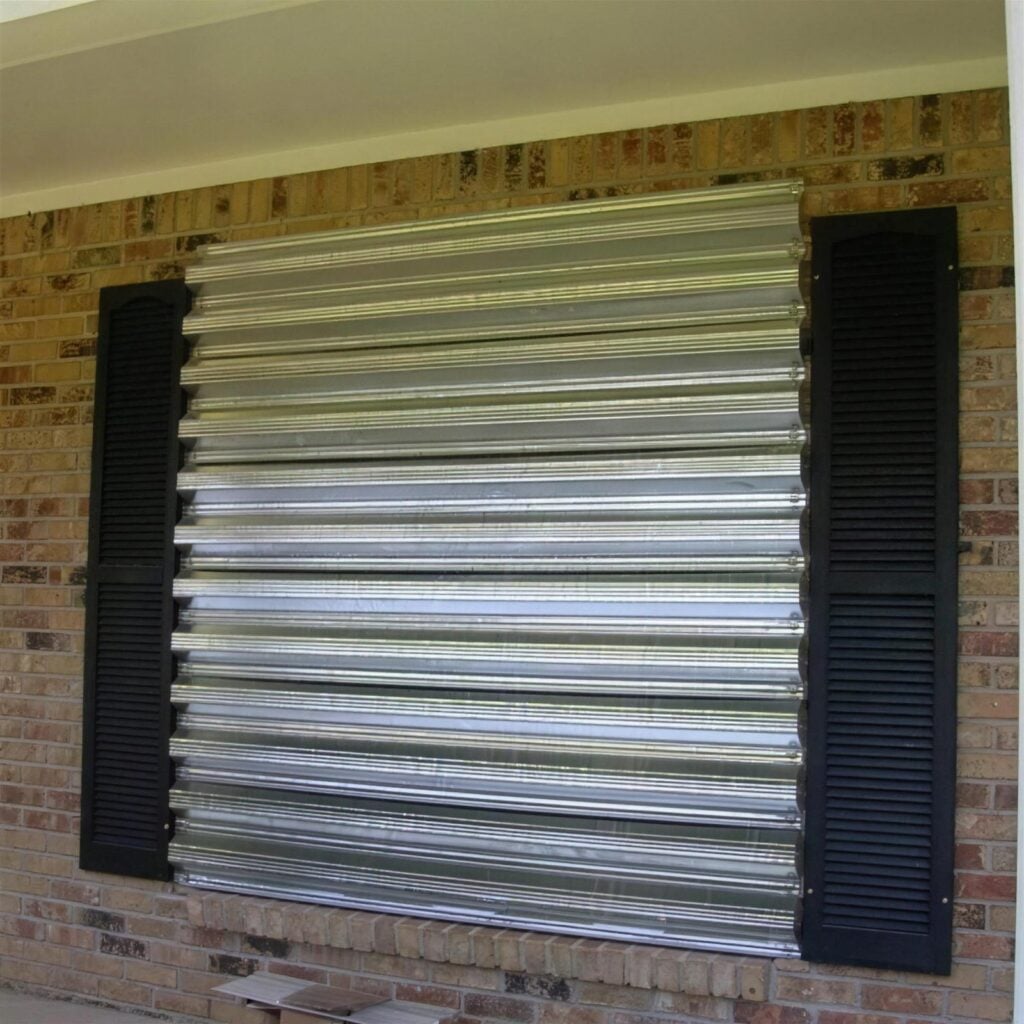
Storm panels are corrugated sheets of aluminum, galvanized steel or clear polycarbonate that slide into tracks or bolt onto permanent anchors around each opening. They are the most common budget option.
- Best for: keeping cost down on a house with many openings.
- Good to know: they take the most time and muscle to put up, need storage space the rest of the year, and steel and aluminum panels darken the house. Clear polycarbonate panels let light in.
2. Fabric panels and storm screens
Fabric systems use a heavy woven fabric, coated or mesh, that attaches to anchors or tracks around the opening. Tested fabric panels stop debris much like a rigid panel but weigh far less.
- Best for: homeowners who want something light to handle and easy to store.
- Good to know: fabric flexes when struck, so it needs room between the panel and the glass. Follow the manufacturer’s spacing.
3. Storm Trim: hidden anchors with fabric panels
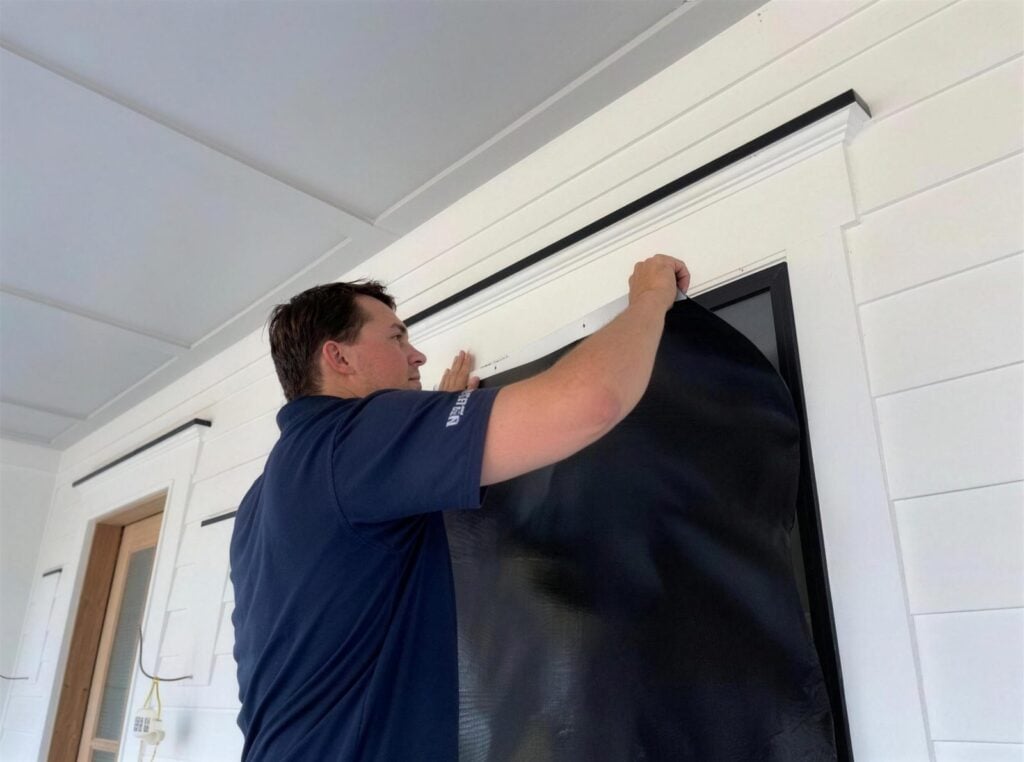
Storm Trim, patented by All American, puts the permanent anchors inside what looks like ordinary exterior trim. Most of the year a removable cover hides them. When a storm is coming, you take off the cover and screw lightweight fabric panels to the anchors with the supplied screws, then take them down and store them indoors afterward. Storm Jamb builds the same anchors into the window frame itself.
- Best for: homeowners who don’t want visible shutter hardware but want something far cheaper than impact glass.
- Good to know: someone still has to put the panels up before a storm. See how Storm Trim works.
4. Accordion shutters
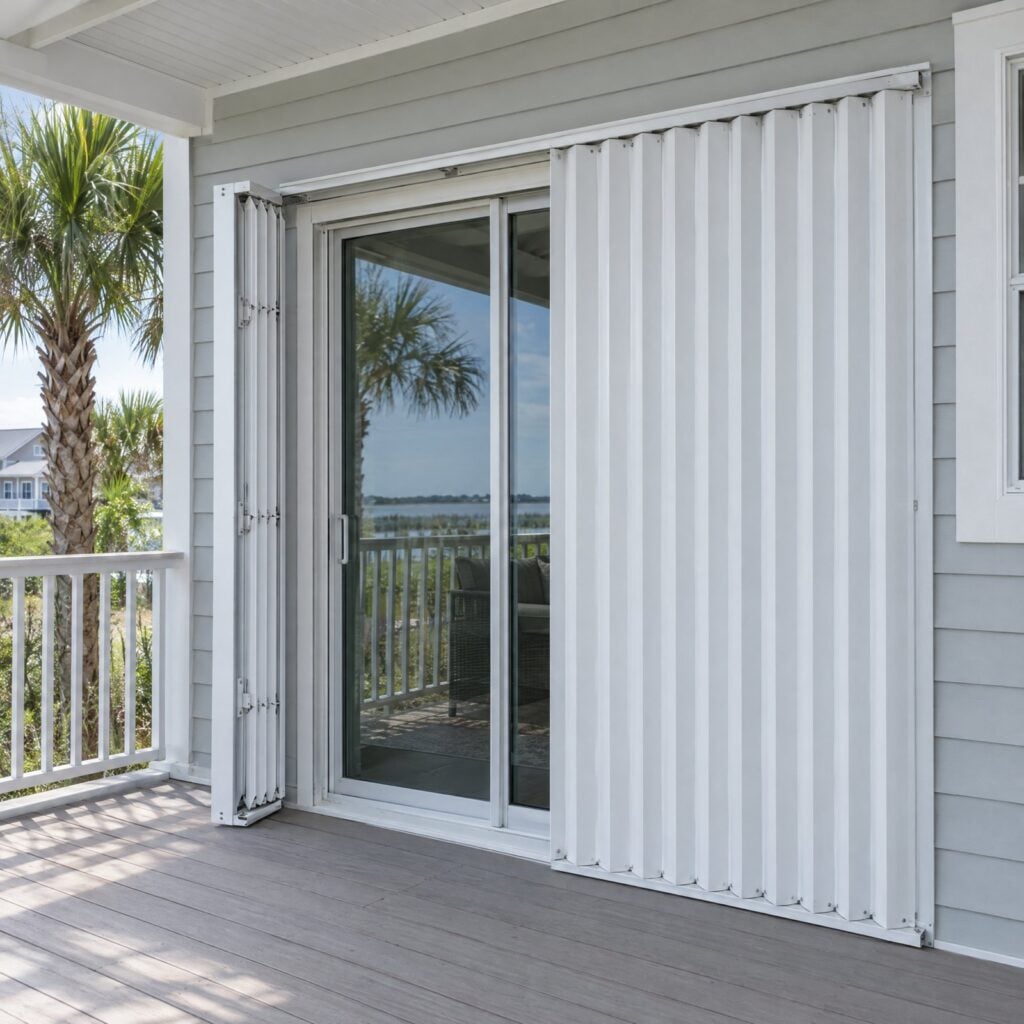
Accordion shutters are hinged blades that stay mounted beside the opening and fold out along a top and bottom track, then lock in the middle. They are permanent, so there is nothing to carry or store.
- Best for: wide sliders, balconies and porches, and anyone who needs to close up quickly.
- Good to know: the folded stacks and tracks stay visible year-round, which matters on a historic or high-end facade.
5. Roll-down shutters
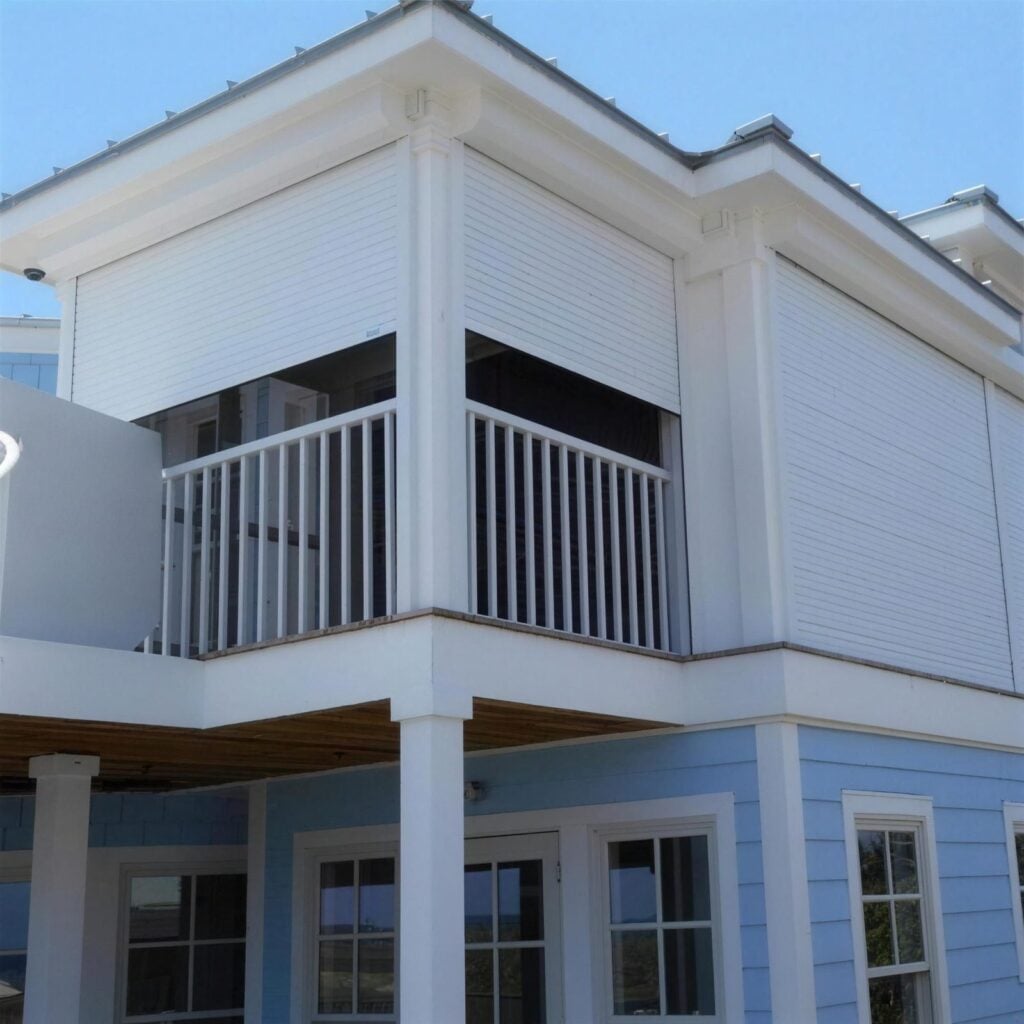
Roll-down (rolling) shutters are interlocking slats that coil into a box above the opening and roll down in side tracks, by hand crank or by motor. They are the fastest to close and the easiest for anyone to operate.
- Best for: second homes, upper floors, and owners who want protection at the push of a button. They also add security and shade.
- Good to know: they cost the most, and the housing box shows above each window. Motorized units need a manual override for power outages.
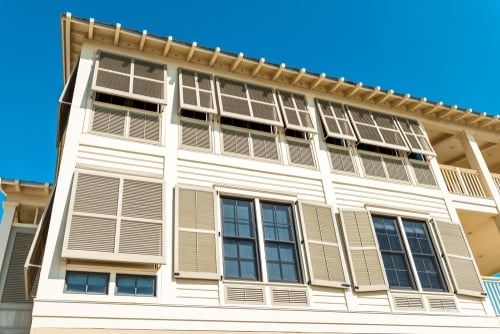
6. Bahama shutters
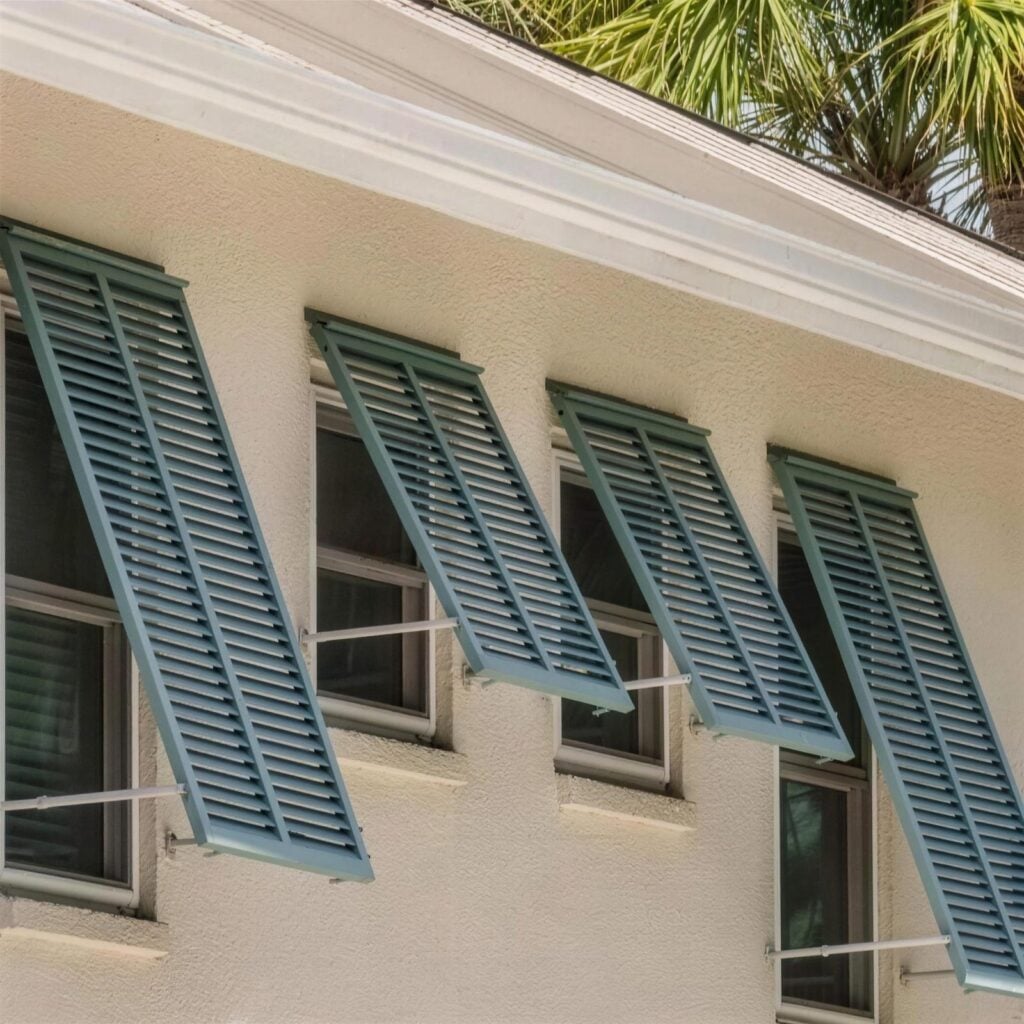
Bahama shutters are hinged at the top and propped open like an awning. They shade the window and let air through every day, then lower and lock over the opening for a storm. They are a favorite on Lowcountry and island homes.
- Best for: homeowners who want everyday shade and coastal style along with protection.
- Good to know: they cut some view and light while open. Ask for an impact-rated model; decorative versions look the same.
7. Colonial shutters
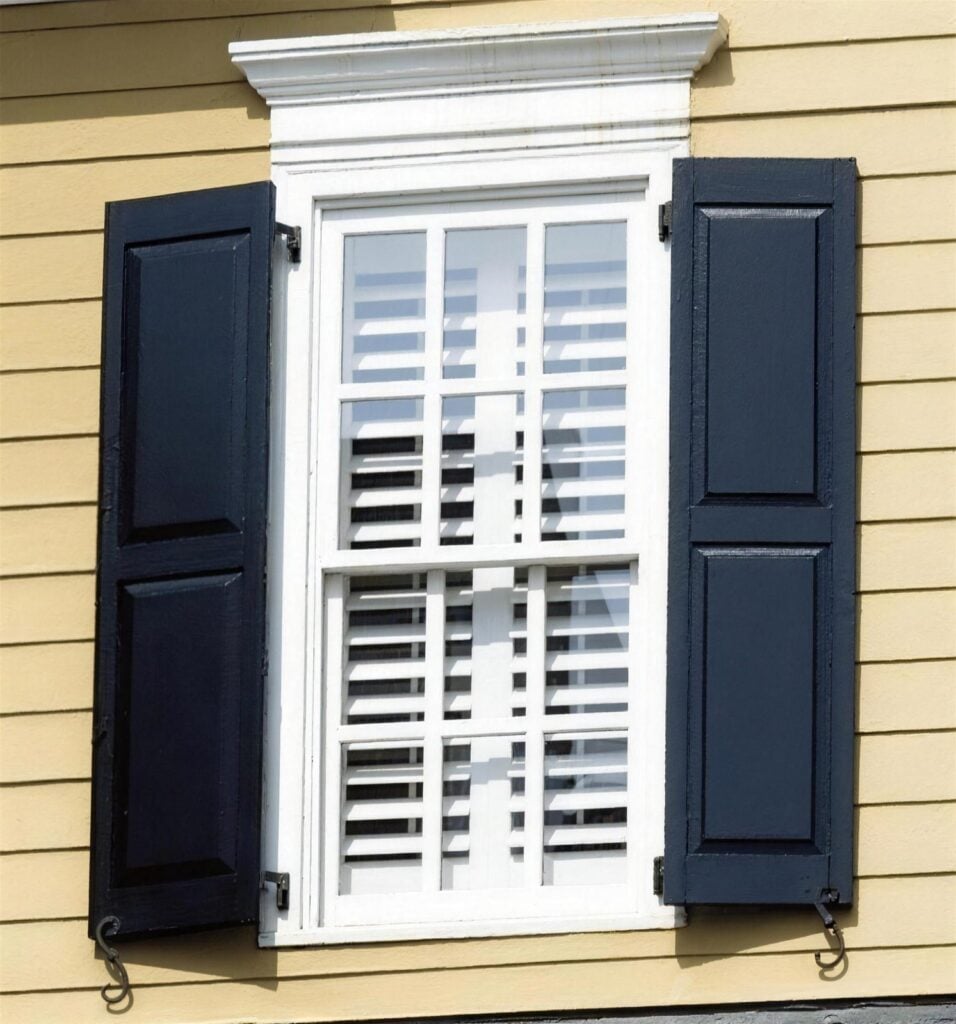
Colonial shutters are louvered pairs mounted on each side of the window that swing closed and lock together. Open, they look like traditional shutters. Raised-panel versions work the same way with solid panels.
- Best for: traditional and historic homes. In Charleston’s historic districts, operable swing shutters usually start from the friendliest position with the Board of Architectural Review.
- Good to know: each pair needs flat wall space beside the window.
8. Plywood, done the right way
Plywood is allowed only in a narrow, engineered form. The residential code’s exception calls for wood structural panels at least 7/16 inch thick, spanning no more than 8 feet, precut to each opening, predrilled, and fastened to permanent corrosion-resistant anchors installed ahead of time. Sheets bought and nailed up during a storm warning don’t meet that and often fail.
The no-shutter option: impact windows
Impact windows use laminated glass in a tested frame, so the window itself is the protection. Nothing has to be closed, which matters if you travel during hurricane season or can’t lift panels. They cost the most per opening but also cut noise and filter UV year-round. Many homes combine options: impact glass on hard-to-reach upper windows and shutters on the rest.
What makes a shutter hurricane-rated?
- Testing. In the wind-borne debris region, protection is tested to ASTM E1886 and ASTM E1996: a missile strike followed by thousands of cycles of wind pressure. The large-missile test, a 9-pound 2×4 fired at the panel, applies to openings within 30 feet of the ground.
- The whole system. The rating covers the shutter, tracks and anchors together, installed per the manufacturer’s instructions. A strong shutter on the wrong anchors isn’t rated.
- Coastal hardware. Near salt water, use stainless or other corrosion-resistant fasteners.
- A permit. Permanent shutters attach to the structure, so they usually need a building permit and inspection.
How to choose the right storm shutters
- Who will close them? If no one may be home, or lifting is hard, look at roll-down shutters or impact windows.
- How fast do you need to close up? Roll-down, accordion, Bahama and colonial shutters close in minutes. Panels take much longer.
- How should the house look every day? Storm Trim and impact windows are invisible. Bahama and colonial shutters look like part of the house.
- What does each opening need? Wide sliders suit accordions; small windows suit panels or colonials. Mixing types by opening is normal.
- What are the rules? Historic districts and HOAs may limit styles, and the code requires tested protection in the debris region.
Shutters, insurance and South Carolina credits
South Carolina requires coastal insurers to tell homeowners about the wind-mitigation discounts they offer, and opening protection is one of them. The credit depends on your carrier and a wind-mitigation inspection, and every glass opening must be covered. One unprotected window can cost you the credit. South Carolina also offers an income-tax credit for qualifying fortification work, claimed on Schedule TC-43. See hurricane shutters and SC insurance discounts.
When to buy
Atlantic hurricane season runs June 1 through November 30. Hurricane shutters are made to measure and usually need a permit, and lead times grow once the season starts. Order in winter or spring. Once a storm is named, the only shutters that help are the ones already on the house. Our hurricane season readiness guide has the full calendar.
Frequently asked questions
Do hurricane shutters work?
Yes, when they are tested, installed with the right anchors and closed before the storm. They keep debris from breaking the glass, which keeps wind from pressurizing the house and lifting the roof. Decorative shutters and improvised plywood don’t give that protection.
What are the best storm shutters?
The best shutter is the one you’ll actually close in time. Roll-down shutters are the easiest and fastest, Bahama and colonial shutters add everyday style, accordions suit wide openings, and fabric panels or Storm Trim keep cost down. Many homes mix types by opening.
How much do storm shutters cost?
It depends on the type, the size and number of openings, impact rating, manual or motorized operation, and how they mount to your walls. Panels and fabric usually cost least, roll-down shutters the most. A real price starts with measuring each opening.
Do you need a permit to put up hurricane shutters?
Usually, for permanent systems. Accordion, roll-down, Bahama and colonial shutters, and the permanent anchors for panels, attach to the structure and are typically permitted and inspected. Your installer should confirm with your building department and pull the permit.
Can you leave hurricane shutters closed all year?
Permanent shutters stay mounted, but they shouldn’t stay closed. Closed shutters block light and fresh air and can block a bedroom window you might need as an emergency exit. Open them or take panels down once the storm passes.
Does taping windows help during a hurricane?
No. Tape doesn’t keep glass from breaking and can leave larger, more dangerous pieces when it does. Use tested shutters, panels or impact windows instead.
Do hurricane shutters lower insurance?
They can. In South Carolina, coastal insurers must disclose their wind-mitigation discounts, and opening protection is one of them. The amount depends on your carrier and inspection, and every glass opening has to be protected.
Can a handyman install hurricane shutters?
A rated shutter only performs if it is anchored exactly as tested, and permanent systems usually need a permit and inspection. Use an installer who follows the manufacturer’s instructions and pulls the permit, or your shutter may not count for code or insurance.
Shutters for your Charleston home
Muhler has installed storm protection across the Lowcountry since 1992: Bahama, colonial, accordion and roll-down shutters, storm panels and Storm Trim, and impact windows. We measure every opening, show you the options side by side, pull the permit and leave one written price. Book a free in-home estimate or call (843) 572-9727.